Planning Meeting - ASR, LLM, and TTS Development
· 4 min read








The team met to discuss strategic priorities and development plans across ASR, LLM, and TTS workstreams for the coming period.
ASR Development
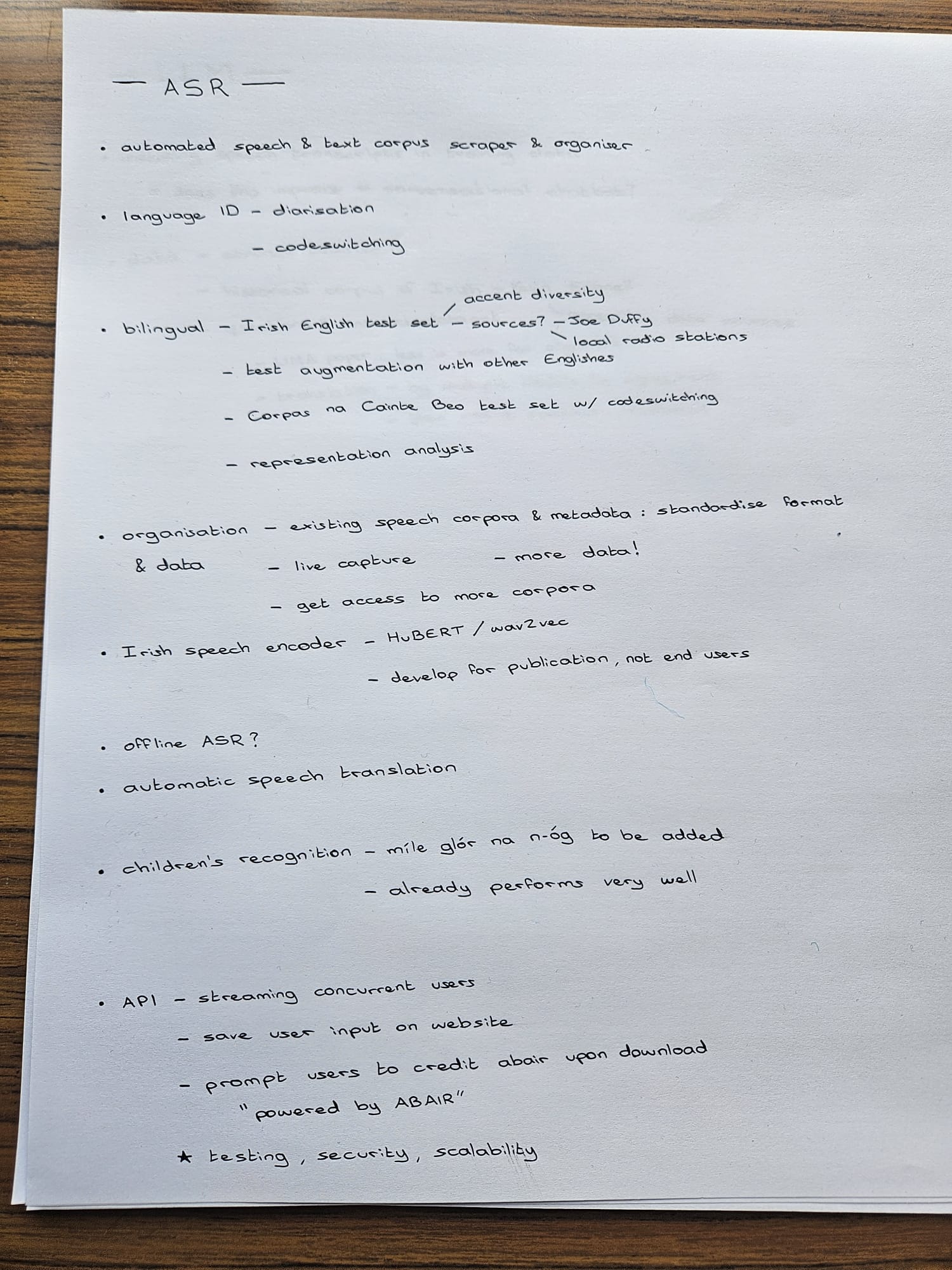
Core Technical Work
- Developing automated speech & text corpus scraper and organizer
- Implementing language ID with diarization and code-switching capabilities
- Building bilingual Irish-English test sets with focus on:
- Accent diversity
- Source diversity (Joe Duffy, local radio stations, Gaeilge24)
- Test augmentation with other English varieties
- Creating Corpus na Gaeilge Beo test set with code-switching support
- Conducting representation analysis
Data & Infrastructure
- Standardizing format and metadata for existing speech corpora
- Planning live capture for additional data collection
- Seeking access to more corpora
- Developing Irish speech encoder (HuBERT/wav2vec) for publication
Future Capabilities
- Offline ASR capability
- Automatic speech translation
- Children's recognition - adding mile glór na n-óg (already performs very well)
API Development
- Streaming support for concurrent users
- Saving user input on website
- Prompting users to credit ABAIR upon download
- "Powered by ABAIR" branding
- Testing, security, and scalability improvements
Evaluation & Resources
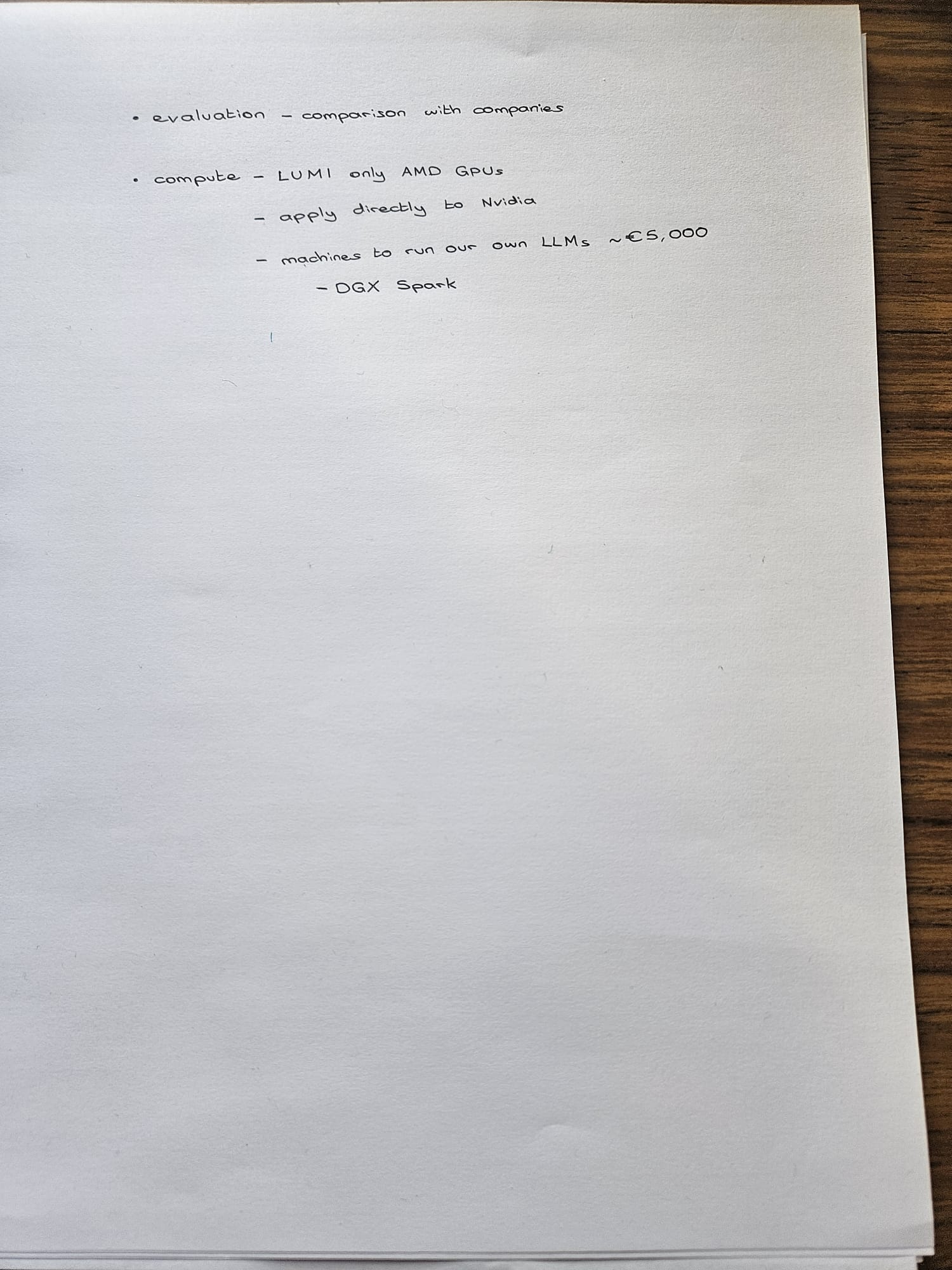
- Comparison with commercial solutions
- Compute resources - LUMI (AMD GPUs only)
- Direct application to Nvidia
- Exploring machines to run own LLMs (~€5,000)
- DGX Spark consideration
LLM Work
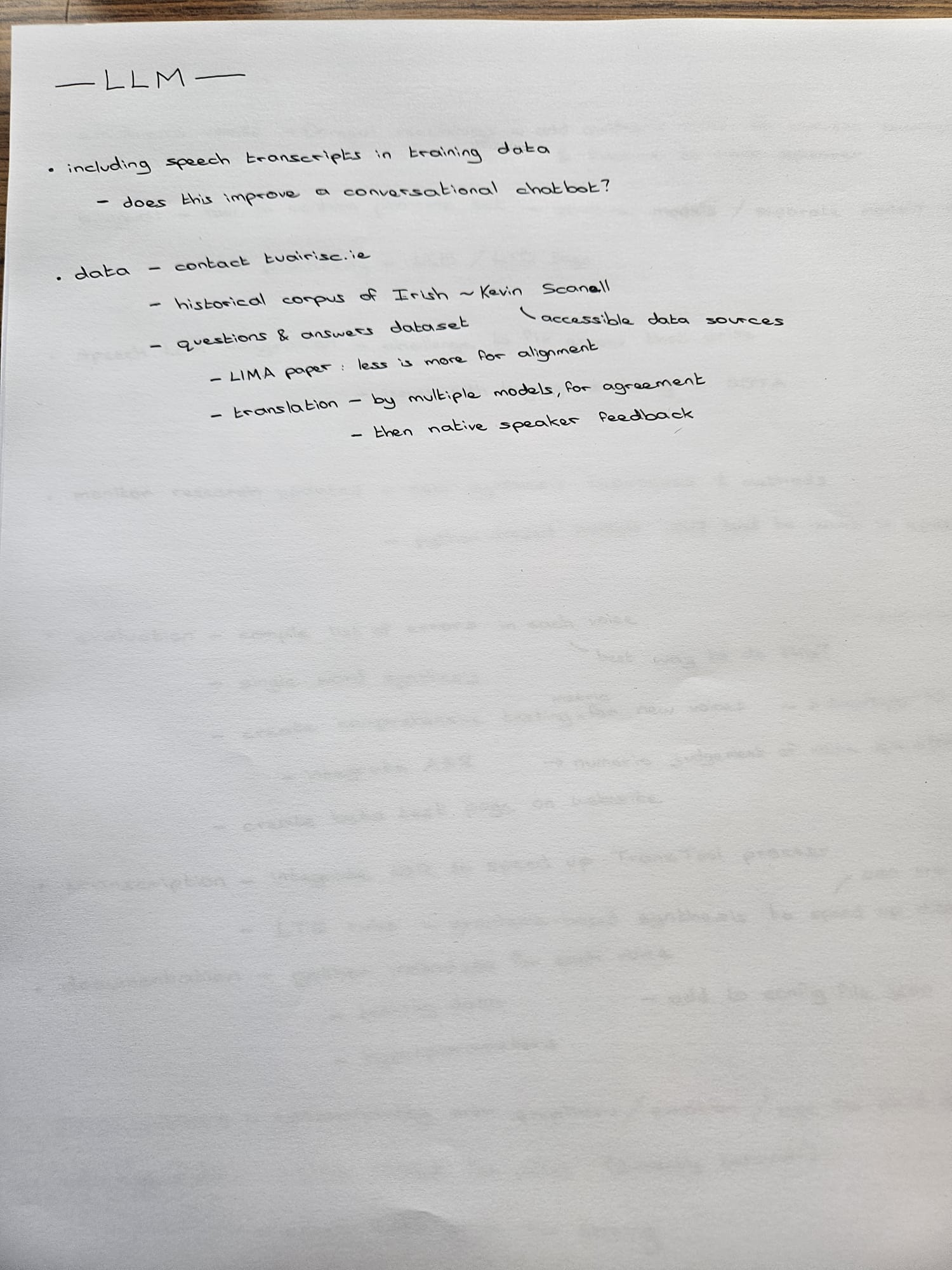
Training Data
- Investigating whether including speech transcripts in training data improves conversational chatbot performance
- Identifying data sources:
- Contact tuairisc.ie
- Historical corpus of Irish (Kevin Scannell)
- Other accessible data sources
- Building questions & answers dataset
Methodology
- Exploring LIMA paper approach - less is more for alignment
- Translation by multiple models for agreement, followed by native speaker feedback
TTS Development
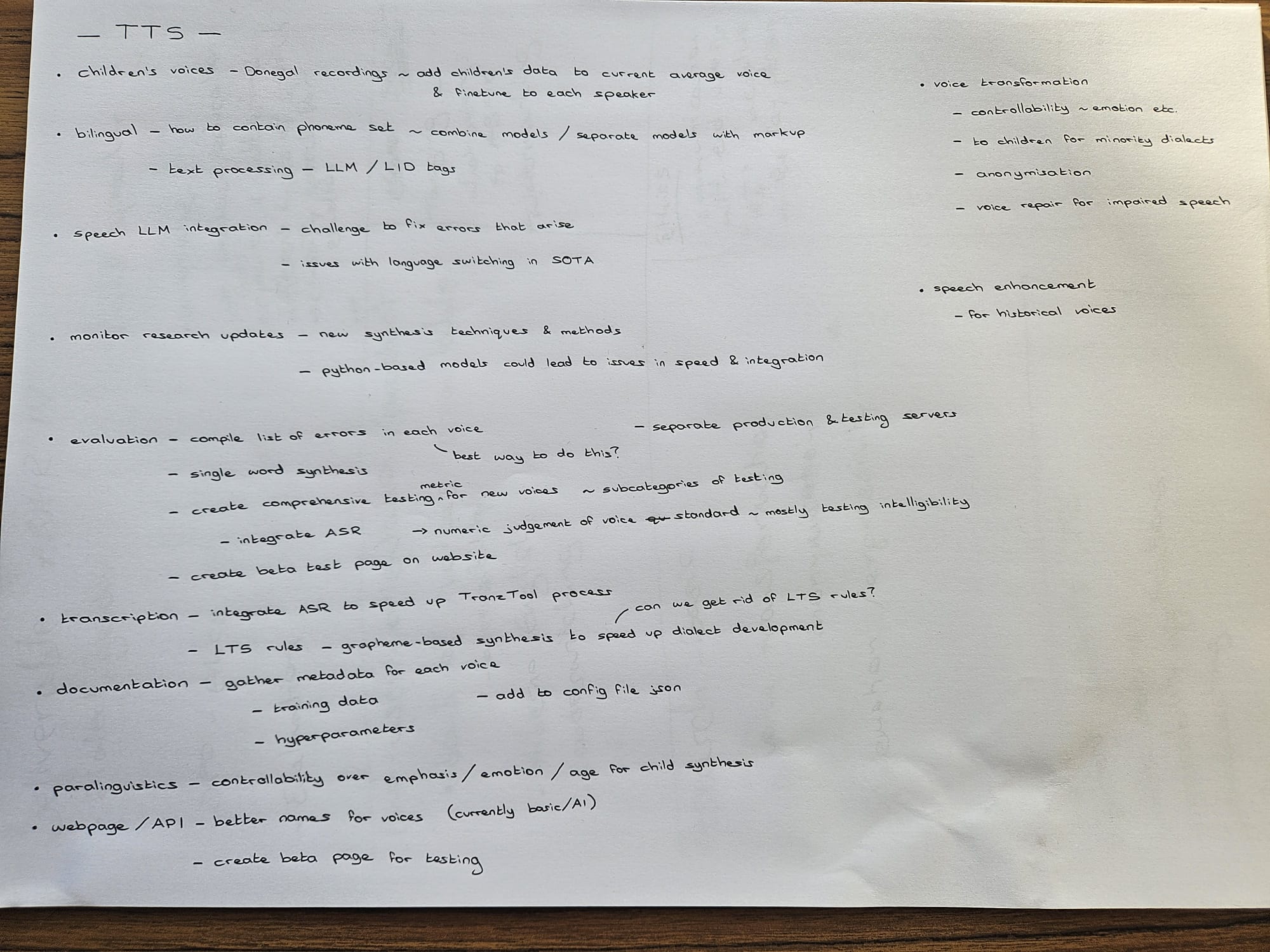
Children's Voices
- Processing Donegal recordings to add children's data to current average voice
- Creating mixture unique to each speaker
Bilingual Synthesis
- Determining how to contain proseme set
- Deciding between combined models vs. separate models with markup
- Text processing using LLM / LID tags
Speech LLM Integration
- Addressing challenges in fixing errors that arise
- Resolving issues with language switching in SOTA systems
Research & Monitoring
- Monitoring research updates for new synthesis techniques & methods
- Addressing potential issues with Python-based models (speed & integration)
Evaluation
- Compiling list of errors in each voice
- Single word synthesis testing
- Metric testing for new voices with subcategories
- Creating comprehensive testing standards (primarily intelligibility)
- Numeric judgment of voice quality
- Integrating ASR for evaluation
Voice Transformation
- Controllability (emotion, etc.)
- Transformation to children's voices for minority dialects
- Anonymization
- Voice repair for impaired speech
Speech Enhancement
- Enhancement for historical voices
Transcription
- Integrating ASR to speed up TransTool process
- Exploring whether LTS rules can be eliminated
- Using LTS rules with grapheme-based synthesis to speed up dialect development
Documentation
- Gathering metadata for each voice
- Adding training data to config file
- Documenting hyperparameters
Paralinguistics
- Controllability over emphasis / emotion / age for child synthesis
Webpage / API
- Better naming for voices (moving beyond basic/AI labels)
- Creating beta page for testing
Infrastructure
- Separating production and testing servers
ABAIR IV Deliverables
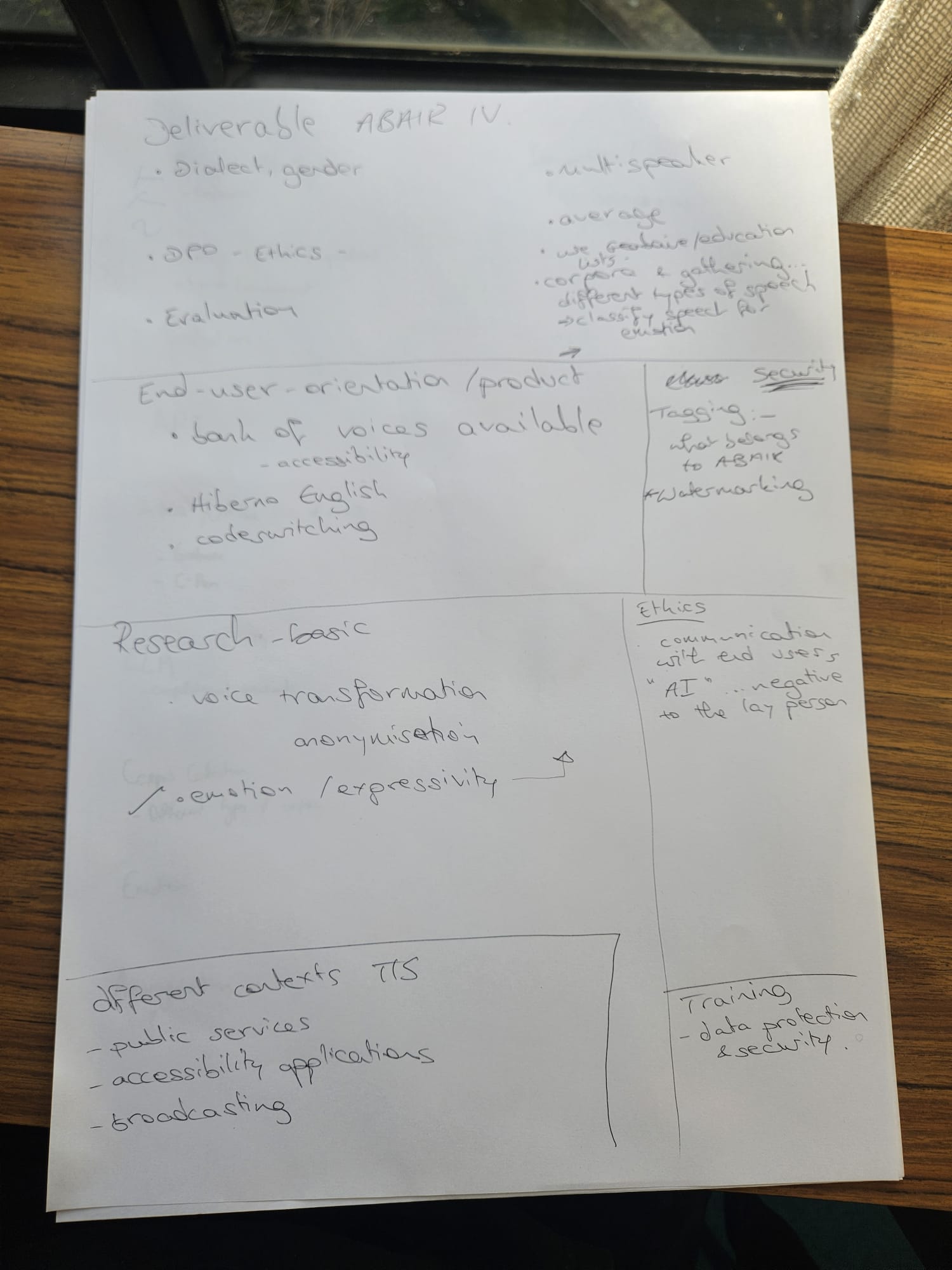
Core Features
- Multispeaker dialect/gender support
- DPO ethics
- Comprehensive evaluation
End-User Orientation
- Bank of voices for accessibility
- Hiberno English support
- Code-switching capabilities
Research Focus
- Voice transformation
- Anonymization
- Emotion/expressivity
Security
- Misuse flagging
- Training attribution to ABAIR
- Kudos-working system
Ethics
- Communication with end users
- Addressing "AI" terminology concerns with lay persons
Application Contexts
- Public services
- Accessibility applications
- Broadcasting
Training & Data Protection
- Data protection & security protocols
Additional Topics
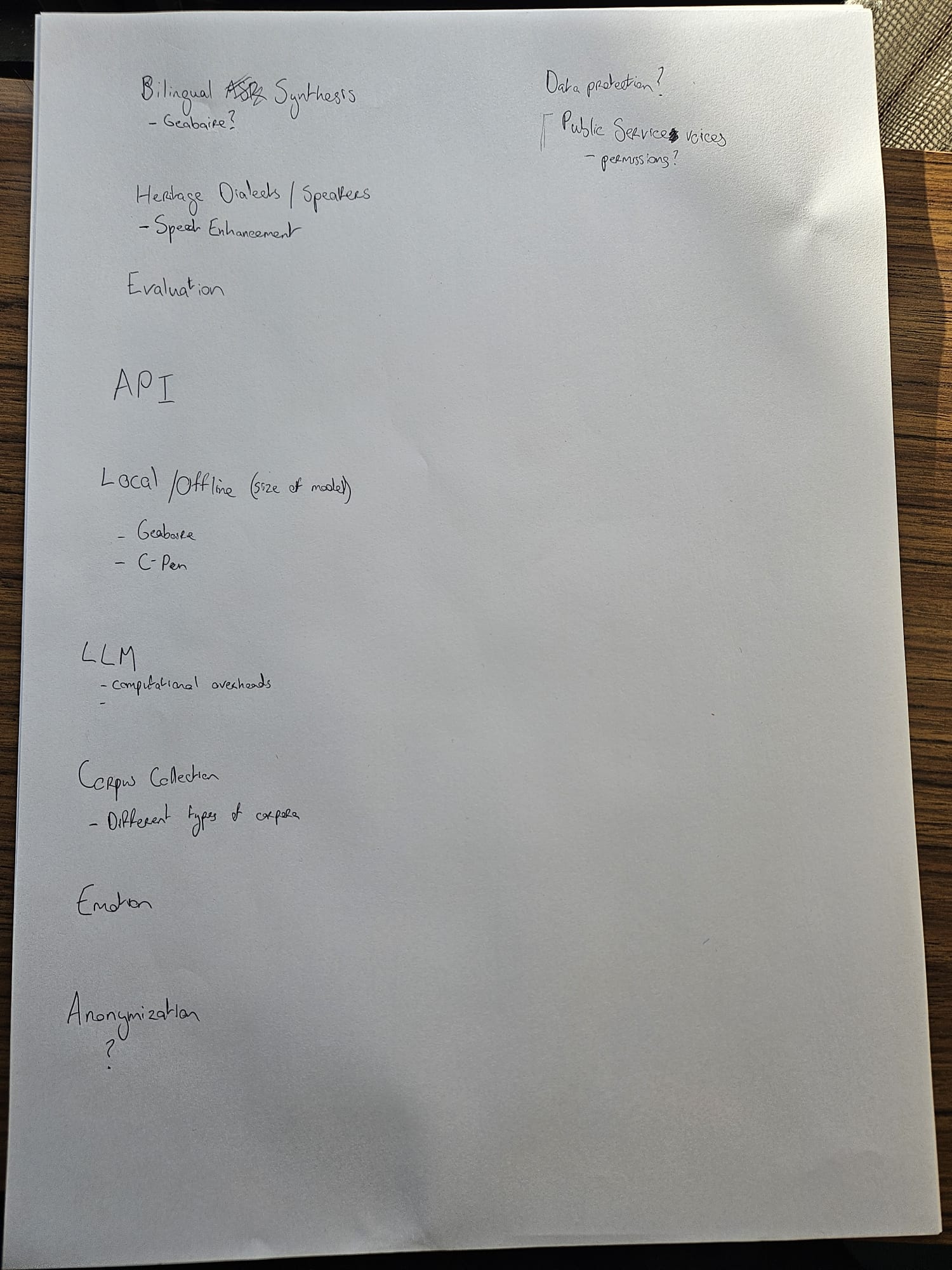
- Bilingual ASR synthesis for Gaeilge
- Heritage dialects and speakers
- Speed enhancement
- Local/offline API (model size considerations)
- C-Pen integration
- LLM computational overheads
- Corpus collection strategies for different types of corpora
- Encoder development
- Anonymization techniques
- Data protection for public services/voices
- Permissions framework